

How to Beat the Tourist Crowds: 10 Tips to Avoid Overtourism
Many travel destinations across Europe and around the wider world are grappling with overtourism, making it increasingly difficult to beat the tourist crowds.
Overtourism no longer affects only the usual tourist hotspots.
What was once a problem largely confined to major cities such as Rome and Barcelona, or popular islands and coastal destinations such as Santorini and Cinque Terre, has now spread to many more destinations.
Krakow is nowadays almost as mainstream as visiting Paris, while Greek islands such as Paros are quickly becoming as touristy as Mykonos.
The tourist map of Europe – and the wider world – is rapidly expanding, partly thanks to the immense growth of low-cost flights, which has made more destinations accessible, as well as the growing number of people who can afford to travel.
Fortunately, with a bit of knowledge, intuition and the right mindset, it is possible to escape the tourist crowds at popular destinations, or avoid places plagued by overtourism altogether by simply choosing a better alternative.
The 10 tips below will help you beat the tourist crowds on your next trip in Europe or beyond!

1. Visit other destinations beyond the major cities and tourist sights
The most obvious way to beat the tourist crowds is to avoid destinations that are well-known for overtourism and visit other places instead.
This doesn’t mean that the alternatives are necessarily worse places to visit.
On the contrary, many alternative travel destinations will actually offer you a much more rewarding experience.
Often, these places attract fewer travellers simply because they are less well known or require a little more effort to reach.
The Picos de Europa in Spain boast natural landscapes that are just as spectacular as the overcrowded Dolomites in Italy, yet see only a fraction of the tourist numbers.
Santorini is not the only destination in Europe for spectacular cliffside views.
In Greece alone, there are plenty of other islands with spectacular views, such as Serifos, Karpathos, Astypalea or Nisyros, and again, all with just a fraction of the tourists.
Italian seaside destinations such as the Aeolian Islands and huge swathes of the Calabrian coast are just as beautiful as the Amalfi Coast.
Even in summer, crowd levels remain manageable there, with visitors predominantly Italian rather than international, so there is little need to beat the crowds in the first place.
Looking for a Central European city break?
Ditch Budapest and head to Cluj-Napoca in Romania, or visit wonderful cities such as Poznań or Olomouc instead of Prague.
This counts for other regions in Europe too.
In the Netherlands, cities like Utrecht or Leiden offer a much better experience than dirty and overcrowded Amsterdam.
In Italy, you could visit nearby Treviso or Trieste instead of Venice, which offer a more relaxed vibe while still having plenty to see and do.
It can really pay off to explore off-the-beaten-path destinations instead of sticking only to the famous tourist spots.


2. Visit popular tourist destinations off-season
Overtourism causes year-round problems for cities and other destinations worldwide, from rising housing costs and locals being displaced from their communities to degraded infrastructure and depleted natural resources.
Apartments that locals once rented year-round turn into short-term Airbnbs, while local shops and restaurants gradually disappear as businesses catering exclusively to tourists take their place.
However, this doesn’t mean that the tourist crowds are actually there year-round in places known for overtourism.
One of the best tips to beat the tourist crowds is simply to visit during the off-season.
This is especially true for city destinations, as you can admire architectural delights and cultural sights just as easily in winter as in summer.
Take Dubrovnik on the Croatian coast, for example, which already suffered from overtourism even before the Game of Thrones craze hit the city.
In summer, you will walk shoulder to shoulder with other tourists along Stradun, the old town’s main thoroughfare.
In winter, you may see only a handful of locals.
Venice is also at its best to explore during the low-season months, when there are few other tourists and hotels offer much more affordable room rates.
Of course, this doesn’t always work for all travel destinations.
Beach and outdoor destinations in particular tend to have a clearly defined season by default.
After all, you can’t go skiing in the European summer, nor will the Algarve work well for a beach holiday in January.
Even for such destinations, there are ways to beat the tourist crowds.
The shoulder season might still give you the perfect combination of good weather and low tourist numbers.
That means going skiing at the start or end of the winter season, or heading to your favourite sunny Mediterranean destination in spring or autumn.
You always face a slight risk with this strategy.
Skiing in the Alps in early March may mean insufficient snow cover, while May can bring a week of rain to the Albanian coast.
However, it could be a risk worth taking.


3. Avoid popular destinations during national holidays and weekends
We all know that travel destinations are at their most crowded during school holidays.
However, surprisingly few people take into account how much national holidays outside the summer break can also affect tourist crowds.
Even throughout the rest of the year, shorter national holidays or even a surprisingly sunny weekend can bring large tourist crowds to popular travel destinations.
Foreign tourists in Italy were surprised to find that streets in tourist hotspots such as Positano and Varenna on Lake Como were already jam-packed with people in early May, making it impossible to beat the crowds.
Of course, for those in the know, this hardly comes as a surprise.
Although it may surprise visiting Americans, public holidays such as Labour Day (1 May) can bring large crowds across Europe.
Even if many people don’t travel abroad, they may still head to popular destinations closer to home within their own region or country.
If you had visited Positano or Varenna one week before or after 1 May, you likely wouldn’t have encountered the same massive tourist crowds.
The same problem is also evident in transport, when tourists unexpectedly find trains and flights fully booked or eye-wateringly expensive.
Public holidays falling on different dates from those tourists are used to can be particularly problematic.
For example, Western tourists visiting an Eastern Orthodox country such as Greece or Romania over Easter may be caught out when the holiday falls on a different date from Easter in Catholic or Protestant countries.
Good tips for avoiding such problems include checking when public holidays fall in the country you plan to visit, as this knowledge can help you beat the tourist crowds.
Keep in mind that it’s not just public holidays that can affect tourist crowds, but also events such as major sports matches or festivals.
Las Fallas can be a great reason to visit Valencia, just as San Fermín is for Pamplona, but the festival crowds make normal sightseeing and relaxing extremely difficult, while accommodation prices shoot through the roof.
If you can’t avoid visiting a country during a national holiday, try to adjust your itinerary slightly.
On a public holiday, you may want to avoid visiting the most popular sights or attractions, such as theme parks, as large crowds will no doubt fill them to full capacity.
Instead, spend some time in the countryside or enjoy a relaxed day at your accommodation.
4. Use social media with extreme caution when choosing a destination
People travel differently nowadays than they did in the past, something that is particularly pronounced across generations.
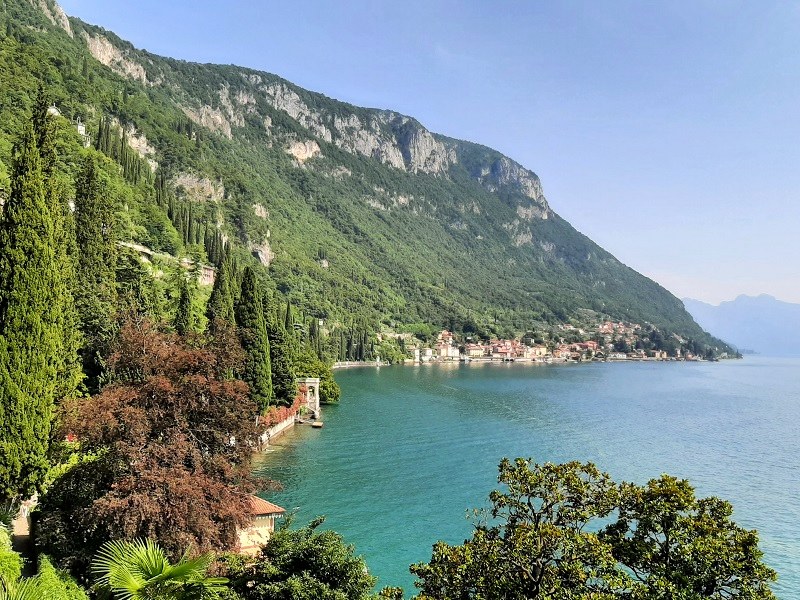
A lot of young people, especially Gen Z, base their travel inspiration almost exclusively on social media.
Sadly, they often don’t even want the same experience they see on Instagram or TikTok, but simply want to be able to create the same pictures and reels.
What counts first and foremost is how perfect everything looks on social media!
Leaving aside just how superficial this is, it creates a lot of perception problems in travel.
Only the picture-perfect shots are shared by these wannabe influencers, making everything look like paradise.
What they won’t show you is how long they had to queue amid massive tourist crowds to create that reel or picture, let alone give you a more in-depth look at a destination and the reality of visiting it.
The problem is that this creates a closed, self-reinforcing information loop.
Someone inspired by a picture-perfect reel of Bali may be horrified by the massive crowds they encounter there, but will still go on to post the exact same misleading shots on social media, failing to show the full reality of the destination.
Of course, there are some good creators, but for every five who genuinely try to be both honest and original, there are 95 cliché-driven wannabe influencers.
This means that you can’t trust anything on social media – especially Instagram and TikTok – when it comes to travel.
What may like empty paradise on those perfect reels and pictures could very well be massively overcrowded.
And that’s not even taking into account all those Photoshopped pictures where dirty brown sea water has been turned deep blue, deceptively cropped images, fake reviews posted solely to earn commission through links to hotels or guided tours, and the ever-increasing amount of AI slop.
Many of such social media posts even border on outright deception, if not outright scams.
Next time you see a pretty picture or reel on social media, make sure to research the destination properly away from those platforms before deciding to visit.
5. Walk away from the main streets
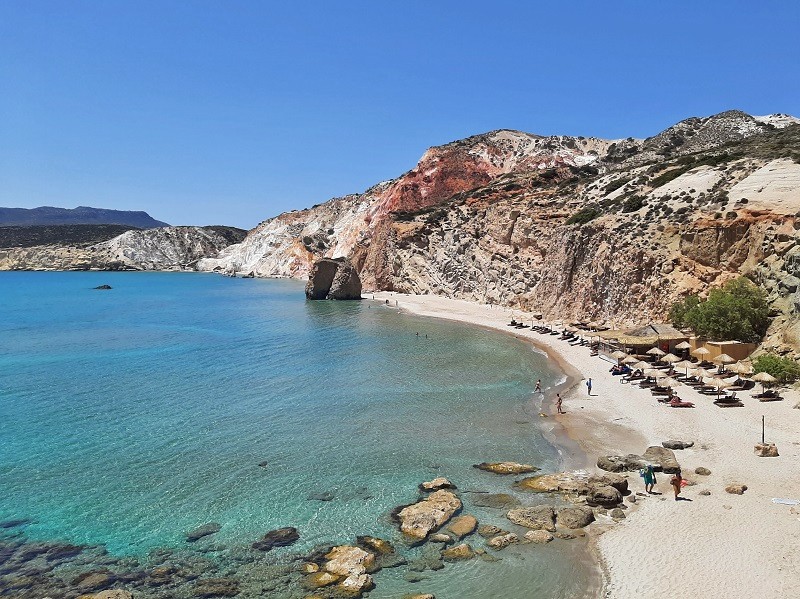
Tourists often congregate around just a handful of sights and streets, creating highly localised problems with overtourism.
This also means that sometimes, the best tips on how to beat the tourist crowds are surprisingly simple.
Many tourists are like sheep, simply following the herd through the same busy streets.
Very few go against the flow and wander into the side streets, or venture away from the main squares and central districts of a city.
Yet by doing precisely that, you can easily avoid the tourist masses, even in cities famous for overtourism.
St Mark’s Square and the Rialto Bridge in Venice are crowded with tourists throughout most of the day.
Walk just a few blocks away, and you may have the streets almost all to yourself.
Besides, in those parts of Venice, you can still enjoy the same picturesque views of canals and historic buildings.
This counts for many more touristy destinations, including London, Athens, and Budapest.
In a city like Prague, the castle and old town are full of tourists, while a beautiful district like Vinohrady remains overwhelmingly local.
Only by also visiting such neighbourhoods, rather than sticking to the most central and touristy areas, can you get a proper feel for a city and really do it justice.
Moreover, you increase your chances of finding a great local bar or restaurant.
Remember that in many European capitals and major tourist destinations, restaurants on the main square and near the main sights are often tourist traps catering to clueless foreigners.
At best, that can mean overpaying for your meal and drinks, but at worst, you might also eat poor food or even get scammed.
As always, there are exceptions to this rule, especially in smaller towns and cities, but the trend is clear: walk away from the main drag, and you increase your chances of finding a bar or restaurant that is actually memorable.


6. Hit the popular spots early
There is, of course, a reason why certain cities or sights are so touristy.
Fans of Gaudí’s architecture certainly won’t want to miss the Sagrada Família in Barcelona.
Those with a keen interest in ancient history will want to visit the Colosseum in Rome or the Acropolis in Athens, while art lovers won’t want to miss the Uffizi in Florence.
Some sights simply draw large crowds because of their beauty and historic importance, and that’s fully justified.
There isn’t an easy way to visit such spots without encountering large tourist crowds.
All you can do is book your ticket and time slot as early as possible, and only through an official website or fully accredited tour company, to ensure you get a spot.
For museums and other sights that require entry, the earliest and latest time slots of the day are typically the quietest.
Yet even in popular museums, there are ways to avoid the crowds.
Gigantic museums like the Louvre in Paris have thousands of visitors queuing to catch a glimpse of the Mona Lisa, while other galleries containing perhaps even more impressive paintings can stand eerily empty.
Again, it shows that most tourists simply follow the herd and only visit the sights they have been told they should see.
When it comes to freely accessible sights – think the Spanish Steps in Rome, the Grand Place in Brussels, or a scenic viewpoint in Santorini – you have to get up early if you want to see them without the crowds.
All those pictures of major sights without the crowds were likely taken in the early hours of the morning.
When I visited Prague’s Charles Bridge at sunrise, I found it absolutely glorious.
The only other people I saw were a few Czech joggers and a couple of serious Asian tourists determined to get the perfect photographs.
When I returned just an hour or two later, the entire bridge was already a madhouse full of people.
Of course, not everyone will feel like setting their alarm for 5 o’clock in the morning while on holiday.
But if you want to have the sights of a major city or tourist hotspot almost all to yourself, getting up early really is your best option.
You can always take an extra nap later in the afternoon, when touristic places are far too crowded anyway.


7. Plan day trips carefully
As we have just seen, one of the best tips on how to beat the tourist crowds is to be there before most tourists arrive.
That is easily possible in a major European capital if you are staying overnight, but it gets more difficult for day trip destinations.
After all, public transport only starts running early in the morning and winds down late in the evening.
This means that you can typically only reach your destination by a certain hour, by which time there will already be plenty of other people around.
Day trip tours make things even worse, as they typically start arriving at an even later hour in the morning.
Popular destinations for a day trip tend to experience their worst crowds from the moment the tour buses arrive until they leave again – and these buses really do tend to arrive and leave at almost exactly the same time!
You can clearly see this at popular destinations that most people visit as a day trip, whether it’s Pisa in Italy or Abu Simbel in Egypt.
Abu Simbel is eerily quiet before the first and after the last tourist bus leaves, making it easy to beat the tourist crowds.
However, between the arrival and departure of all the tour buses from nearby Aswan, there is no escaping the crowds.
Even in Pisa, with its low-cost airport and easy access, there are surprisingly few tourists in town after the tour buses have left, especially if you walk away from the Leaning Tower.
All of this shows two things.
First of all, at many destinations, it can make more sense to stay overnight than visit as a day trip.
This way, you can beat the crowds by sightseeing in the morning or evening, after the tour buses have left or before they arrive.
Secondly, it’s best to avoid organised tours, especially by bus.
You will be travelling with dozens of other people and are likely to arrive at the same time as tens of other buses.
If you are adamant about making a day trip, try to arrive before most other tourists do, or stay longer into the afternoon or evening.
A great way to do this is either to take the first public transport option in the morning or to do the trip by car.
If you don’t have your own wheels, a private transfer or tour can make a lot of sense.
Although it wasn’t cheap, I absolutely loved my private tour of Abu Simbel, as thanks to an early start and a smart trick by my knowledgeable guide, we arrived before all the other tourists, and I had the entire ancient temple to myself.
You should also think hard about whether a day trip is really worth it to begin with.
Some popular destinations for a day trip, such as Hallstatt in Austria, have massive overtourism problems.
During the day, you will be walking shoulder to shoulder with predominantly Asian tourists, making the place feel more like Disneyland than an actual lived-in Austrian town, beautiful as it is.
Personally, I wouldn’t bother and would instead make a day trip from Salzburg to other scenic lakeside or Alpine towns, as there are many uncrowded alternatives.


8. Avoid cruise ships
Nothing screams overtourism more than massive cruise ships.
Whenever a cruise ship makes a port call, thousands of people suddenly swamp the town, making it near impossible to beat the tourist crowds.
If you want to escape the tourist crowds, then a cruise is not the holiday you should book.
That said, river cruises or small-ship cruises at sea can be a viable alternative, as long as the ships don’t carry too many passengers.
I have to say that I did enjoy my Nile river cruise and was able to both relax quietly on board and see the sights during port calls without having to deal with large crowds.
However, this was partly because I either went out alone or arranged a private tour during a port call.
If a river cruise ship drops you off in the middle of the day in a touristy city and you only have a few hours to look around, it will be next to impossible to beat the crowds.
You are still captive to a predetermined cruise itinerary and the arrival and departure times of your ship.
Even if you have zero interest in cruising, you should still take the arrival and departure times of cruise ships into account.
Especially smaller destinations, such as Kotor in Montenegro, Santorini or Chania in Greece, or Juneau in Alaska, can quickly become overrun by the tourist mob when a large cruise ship is in town.
If you want to beat the tourist crowds, try to visit such destinations when no cruise ship is scheduled to anchor.


9. Don’t assume “hidden gems” and “underrated destinations” are actually uncrowded
Everybody gets travel inspiration in different ways.
Some people choose to travel to a certain place because they saw appealing images on social media, while others take inspiration from hearsay from friends.
Then there are people who visit a place simply because, for whatever personal reason, it has always held a certain attraction for them.
Yet even the most carefully planned trip can turn out very differently from what you expected when a destination is far more touristy than anticipated.
This is partly because many travel destinations are heavily hyped online, while the reality on the ground can be very different.
Much of this is due to deceptive social media pictures and reels that show only a carefully curated side of a place rather than the full picture.
However, travel writing is also partly to blame, whether in social media captions, blogs, or even old-fashioned tourist brochures.
A lot of this writing is full of clichés, talking about “hidden gems” and “underrated destinations”.
Yet all too often, these words are grossly inaccurate, setting people entirely on the wrong foot.
I’ve seen influencers on social media and travel bloggers go as far as calling a city like Malaga as a “hidden gem” or Montenegro an “undiscovered destination”.
That might appear to be true if you are a clueless American influencer with non-existent geography skills who has never heard of these places before and doesn’t really know a thing about Europe or the travel industry as a whole – which was actually the case in both situations mentioned above – but it is far from reality.
Málaga and the wider Costa del Sol receive well over 10 million visitors annually.
You can even call the region the cradle of European mass tourism.
Similarly, Montenegro has always been a popular summer destination, and if you walk around Budva or Kotor during the summer months, you will think of overtourism, not a hidden gem destination.
The bottom line is that if you haven’t heard of a place before or don’t really know anything about it, you should never automatically take someone else’s word for it that it is a hidden gem or undiscovered destination.
Lake Bled, Český Krumlov, Albania – call them whatever you want, but these are not hidden gems or undiscovered destinations, not by a long shot.
They are firmly on the European tourist map, have been for a long time, and, in the case of the Albanian coast, are even starting to show signs of overtourism.
Unfortunately, much of today’s social media, especially Instagram and TikTok, has massively impacted users’ attention spans.
This is why so many travel influencers feel the need to shout the same clichéd keywords, such as “hidden gem” or “underrated country”, in pretty much all the content they make.
Such phrases draw in views and clicks from an increasingly dumbed-down public, but are often not true at all.
Whenever you see someone call a certain place a hidden gem, always do proper research into the destination itself, as well as the person or website making the claim.
By looking at whether someone is actually well-travelled, as well as the other content they have produced, you can quickly tell whether they are in a position to make such a claim or whether it is likely just clichéd nonsense.
After all, you wouldn’t take a restaurant recommendation from someone who only eats Pop-Tarts for dinner, and thus every half-decent place looks like fine dining.
Also take into account that we all perceive overtourism and crowds in different ways.
A well-travelled, adventurous budget backpacker who has spent three years travelling across Southeast Asia might have a lower tolerance for crowds than a social media creator from a busy city like Tokyo.
If both visited Luang Prabang in Laos, the backpacker might find it too touristy compared with some truly off-the-beaten-path places he visited before.
Meanwhile, our influencer from Tokyo might compare it with his hometown and find the city incredibly relaxed and peaceful.
There will be destinations around the world where the tourism situation is much more nuanced than simply being a hidden gem or suffering from overtourism, with plenty of shades of grey in between.


10. Don’t follow a rigid schedule
A lot of tourists draw up a rigid schedule of what to see and do each day of their trip.
Such a rigid schedule often doesn’t work well in cities and other destinations known for overtourism.
After all, you can’t easily beat the tourist crowds if your schedule dictates that you must visit the Anne Frank House in Amsterdam at 9 in the morning, go to the Rijksmuseum at 11, have lunch at 1.30 sharp in a pre-selected restaurant, spend from 3 to 5 o’clock exploring the city centre, and then head off on a dinner cruise along the city’s canals.
Although this can be efficient, it leaves you with little flexibility to adapt your plans according to how busy a place is, making it next to impossible to avoid the tourist crowds, as you will very much be part of them yourself.
Moreover, there is absolutely zero room to do anything spontaneously.
What if you discover an amazing bookshop on your day in Lisbon that you want to browse around for a while longer?
What if you stumble upon a picturesque part of the city that you didn’t incorporate into your plans?
And what if you spot an appealing local café where you feel like sitting down for a drink, even though you have a pre-booked tour starting in half an hour?
Many destinations across the world – especially European cities – are best discovered without firm plans.
Sure, it’s smart to make one or two reservations for a particular sight, museum, or perhaps a tour that you really want to do.
After all, some sights may sell out or require advance reservations.
However, it’s never smart to plan your entire day around non-flexible arrangements like that.
Especially in cities, you will find that massive crowds and sheer overtourism will tire you out more quickly than anticipated.
There will be moments when you want to escape the crowds, find a quieter corner, have a spontaneous drink, or simply rest at your hotel.
My tip would be to avoid a rigid schedule and instead draw up a list of sights or activities you may want to do.
You can then decide where to head next on the spot, depending on your mood, crowd levels, weather, and other factors.
Moreover, you should never be afraid to follow your own instincts and simply wander around randomly.
It is by wandering around randomly that you can easily escape the tourist crowds and often make some interesting discoveries, whether it’s a traditional restaurant popular with locals, a peaceful park, a hidden viewpoint, or a chance encounter with someone interesting.
This way, you will have a more meaningful and certainly more unique local experience, rather than merely ticking off the same sights as all the other tourists.


Conclusion
Beating the tourist crowds is not necessarily about avoiding popular destinations altogether, but about knowing when, where and how to experience them on your own terms.
A little flexibility can help you escape busy places, discover quieter corners, and find unique sights, cafés and restaurants.
This way, you can also see a different side of even the most overtouristed travel destinations.
Of course, the easiest way to escape overtourism is to choose different destinations altogether, rather than those where most travellers blindly head.
They often follow unrealistic and clichéd social media trends, which drive them towards the same popular destinations.
With a bit of research, you can still find that crowd-free beach or mountain hike, or that stunning old town that mass tourism has yet to discover.
Sometimes, all it takes to avoid the tourist crowds is visiting a popular destination during the low season, getting up early for a famous sight, or wandering a few streets away from the main drag.
Yet ultimately, the best travel experiences often happen when you drop that rigid sightseeing schedule, stop following the crowds, and start following your own instincts.

What a great article. I was lucky to start traveling many many years ago and experienced things not possible today. So in total agreement with your tips. Especially the don’t plan out your day by the hour one. Thank you for your valuable insights.